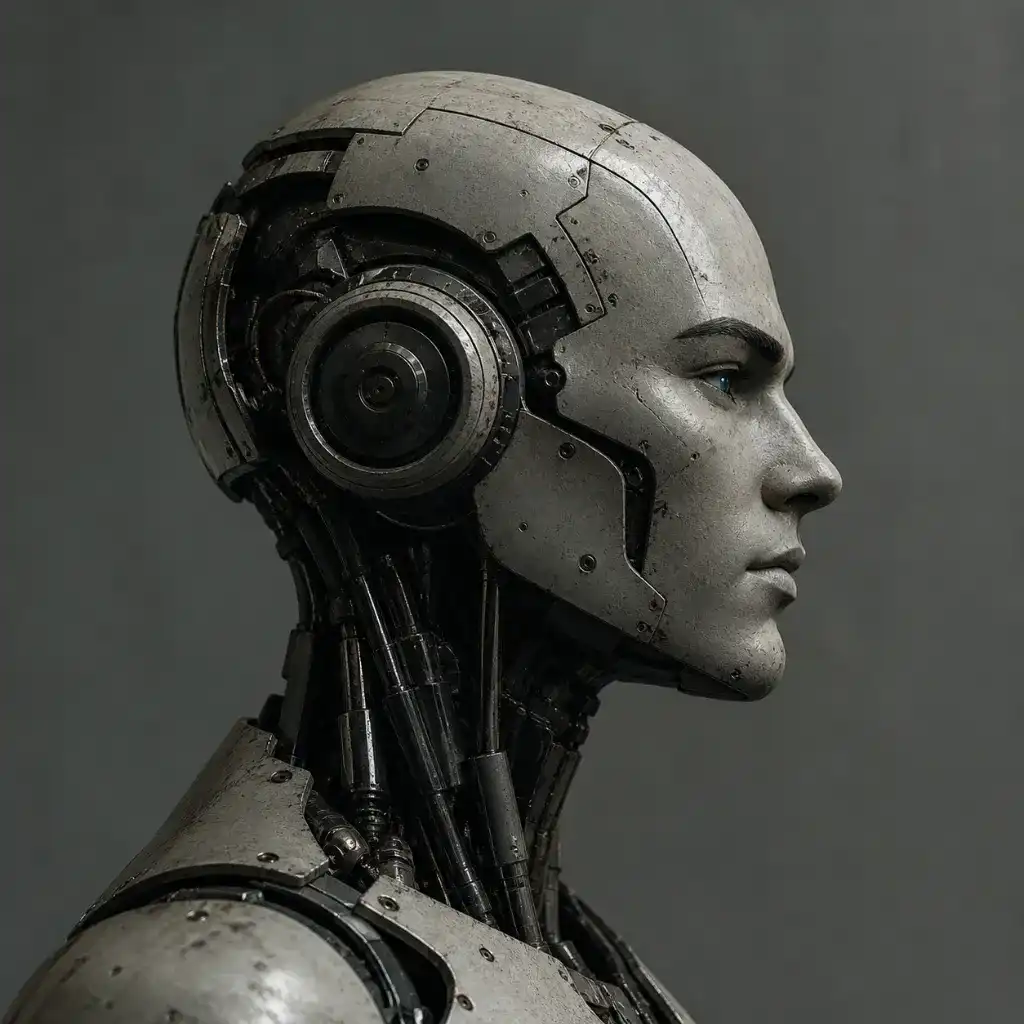
The rest of the world should be paying attention
While Western robotics companies are still showing off prototypes in lab demos, Chinese manufacturers are shipping humanoid robots to factory floors. Thousands of them. At prices that make the competition look like they are selling luxury goods.
I went down the rabbit hole on this one, pulling apart policy documents, McKinsey supply chain estimates, and deployment reports from actual factory lines. It is a bigger story than most people realize.
The government is all in
China does not do things halfway when it picks a technology to back. In November 2023, the Ministry of Industry and Information Technology published a roadmap (original source) with two deadlines: mass production of humanoid robots by 2025, and full supply chain integration by 2027. That means humanoids in factories, hospitals, schools, and homes.
By the end of 2024, China already had over 2 million industrial robots deployed. The 2025 Government Work Report added "embodied intelligence" to a short list of technologies getting accelerated funding. A CNY 1 trillion national venture capital fund (roughly $140 billion) backs the whole thing.
The interesting part is how regionalized the effort is. Beijing focuses on the AI brain. Shanghai runs the open source ecosystem. Shenzhen taps the Greater Bay Area electronics supply chain for rapid prototyping. Zhejiang ties robots to its automotive industry. Each hub has its own component suppliers, data centers, and testing facilities, and they feed off each other. It mirrors the playbook that made Chinese consumer electronics so competitive globally.
Why the robots are so cheap
This is the part that matters most. Unitree sells its G1 humanoid for $16,000. AgiBot RAISE A1 is a 175cm, 49 degree-of-freedom platform aimed at factory work. Western competitors like Figure AI and Tesla Optimus are targeting price points above $50,000 for early models, and that is optimistic.
The cost gap comes down to one thing: the electric vehicle supply chain.
Humanoid robots and EVs share a surprising amount of hardware. High-torque motors, lithium-ion battery packs, LiDAR sensors, power electronics, CNC machined structural frames. China already dominates manufacturing for all of these. Actuators alone make up 40-60% of a humanoid bill of materials, and Chinese firms reuse frameless brushless DC motors and planetary gear systems straight from EV powertrains.
A McKinsey analysis estimated that building a robot comparable to Tesla Optimus Gen 2 without Chinese suppliers would cost up to $150,000 instead of $46,000. China controls 90% of global permanent magnet processing, 40% of precision bearings, and 35% of motors. That is not a lead you close in a few years.
Companies like Unitree push this further through vertical integration. They design and manufacture their own motors and reducers instead of sourcing from third parties. The G1 uses what they call a "standard body" design that cuts down the number of wires, screws, and chips. While many Western startups are running low-volume pilots, Unitree is shipping thousands of units a year.
Bill of materials breakdown
| Component | % of BOM | Cost reduction mechanism |
|---|---|---|
| Actuators | 40-60% | Reuse of EV brushless DC motors and planetary gears |
| Perception systems | 10-20% | Scale economies from autonomous driving LiDAR |
| Battery modules | 5-10% | Lithium-ion cells and BMS from the EV market |
| Structural frames | 5-10% | CNC machining from automotive clusters |
| Compute platforms | 10-15% | Domestically optimized NPU and GPU architectures |
The hardware has gotten serious
A couple of years ago, Chinese humanoids looked clunky. That has changed fast.
Unitree H1 stands 180cm tall and moves at 3.3 meters per second with 360 Nm of knee torque. AgiBot A1 has 49 degrees of freedom and can carry an 80kg load. UBTECH Walker S2 is already on BYD assembly lines. Fourier GR-1 is being tested in medical rehabilitation settings.
The most impressive recent development is in hands. AgiBot "Skill Hand" has 12 active degrees of freedom with visual fingertip sensors precise enough to thread a needle. Unitree Dex5-1 runs 94 tactile sensors per hand at 1,000 Hz, which gives it the ability to gauge the texture and weight of soft objects. This is the kind of manipulation that has been a bottleneck for humanoid usefulness, and it is getting solved.
Leading Chinese humanoid platforms
| Manufacturer | Model | Specs | Use case |
|---|---|---|---|
| Unitree | H1 / H1-2 | 180cm; 3.3 m/s; 360 Nm knee torque | Industrial R&D, locomotion |
| Unitree | G1 | 132cm; 35kg; 23-43 DOF; $16,000 | Education, light service |
| AgiBot | RAISE A1 | 175cm; 55kg; 49 DOF; 80kg load | Manufacturing, logistics |
| UBTECH | Walker S / S2 | 170-176cm; 41-52 servo joints | Automotive assembly |
| Fourier | GR-1 | 165cm; 55kg; 40+ DOF | Medical rehab, elderly care |
The AI architecture is layered like a nervous system
Chinese researchers have settled on a three-tier framework for robot intelligence that maps loosely onto human neurology:
- The "brain" handles planning, language understanding, and decision making. It runs on large multimodal models like Baidu ERNIE or Huawei Pangu 5.5.
- The "cerebellum" translates high-level instructions into physical movement. It handles gait stability, collision avoidance, and whole-body coordination using reinforcement learning.
- The "body" is the hardware layer, feeding proprioceptive data back up.
The brain layer in practice
This split is not unique to China, but the speed at which they are deploying it is. Most Western platforms still treat the perception-control loop and the language model as bolt-on systems. Chinese platforms are increasingly fine-tuning the whole stack together, on data collected from their own factory deployments.
They are already on the factory floor
This is the part that should make Western robotics companies uncomfortable. These are not concepts. They are working.
At NIO manufacturing, UBTECH Walker S inspects door locks, headlight alignment, and fluid levels at over 99% accuracy, reporting results directly into the factory Manufacturing Execution System. At BYD, Walker S2 handles logistics and can perform a 3-minute autonomous battery swap without shutting down. At CATL battery plants, Spirit AI Xiaomo inserts flexible wiring harnesses with a 99%+ success rate, doing the work of three human laborers.
The automotive sector, specifically the new energy vehicle industry, has become the proving ground. But it will not stay there.
Robots in hospitals, nurseries, and living rooms
China has 300 million people over the age of 60 and not enough caregivers. In June 2025, the government launched a national elderly care robot pilot requiring companies to deploy at least 200 robots for six-month trials. In Shenzhen, a humanoid called Xia Lan plays chess with seniors and assists with moxibustion therapy. Huawei launched a health-focused humanoid that gives personalized recommendations and delivers medication.
Education is next. The Ministry of Education "AI Plus Education" initiative is putting robots in kindergartens. Pilot programs in Shenzhen and Shanghai use intelligent monitoring to personalize activities for young children. Companion robots like Noetix Bumi are entering the consumer market at around $1,400, pitched as educational family companions.
I am honestly not sure how to feel about robot companions for toddlers. The adaptive learning angle is interesting. The surveillance angle less so.
What this means going forward
AgiBot has declared 2026 "Deployment Year One" and plans to roll out 10,000 units this year alone.
Nobody is going to replicate China EV supply chain overlap on a short timeline. The cost gap is baked into industrial geography, decades of manufacturing investment, and raw material control. Other countries can compete on software, on application-specific design, on regulatory frameworks that do not lag five years behind the tech. But on hardware cost? That is China game for now.
If you want to know where this is headed, do not watch the keynote demos. Watch the BYD assembly line footage. The robots are already clocked in.